Nicole Bonvarlet
The Best Werewolf Short Stories 1800-1849Nicole Bonvarlet, the host of the Chevalier Bayard’s Arms in St. Yrieux, is a minor but revealing figure in “The Wehr-Wolf: A Legend of the Limousin.” His inn becomes the town’s chief shelter from the feared Wehr-Wolves and, at the same time, the principal chamber in which fear is converted into communal storytelling. Through Bonvarlet’s hospitality, interruptions, questions, and credulous exchanges with Dr. Antoine Du Pilon, the narrative shows how a supernatural threat is socially produced as much through talk as through violence.
Identity and Setting
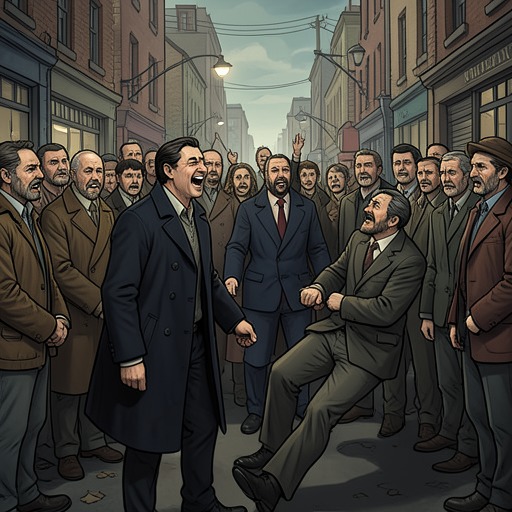
Nicole Bonvarlet is introduced as the proprietor of the small Cabaret of St. Yrieux bearing the sign of the Chevalier Bayard’s Arms. He belongs to the circle of unemployed or idle townsmen who gather there around Dr. Antoine Du Pilon: Cuirbouilli the Currier, Jerome Malbois the Joiner, La Jacquette the Tailor, and several other gossips. Bonvarlet is not presented as a learned authority. His importance comes from his position as host, provider of wine and shelter, and conversational centre of a community that has little employment but an intense appetite for wonders.
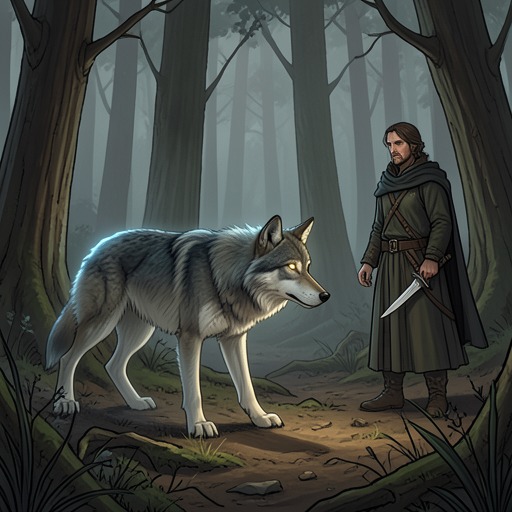
The inn is therefore more than a backdrop. It is a social refuge in a town unsettled by reports that a Wehr-Wolf, or perhaps a troop of them, inhabits the Limousin woods. At night, the inhabitants hear terrifying howlings and the rush of a chase through deserted streets. Rather than arm themselves and confront the creatures, they strengthen their windows and abandon anyone already attacked, offering only brief pity and prayers for themselves. Bonvarlet’s establishment supplies the alternative: a hearth, wine, and the company of neighbours who can remain together until morning.
Fear as Communal Conversation
The werewolf incursions become, in the narrator’s account, an epoch in St. Yrieux’s local history because they are continually discussed at the Chevalier Bayard’s Arms. The townspeople gather under the pretence of protecting one another, but their meetings also magnify their terror. Repeated tales, including old stories that are explicitly described as false, make the company too frightened to disperse; the men consequently agree to spend the night around Bonvarlet’s wine flask and blazing fagots.
Bonvarlet participates in this process without controlling it. His opening remarks on one stormy evening frame the inn as the safest place in the world: he would not exchange its hearth-side, merry host, and good liquor for exposure in the Limousin forest. The concrete comforts of the tavern are set against the wind, rain, and nocturnal danger outside. His speech thus establishes the emotional economy of the gathering: fear drives the men indoors, while drink and fellowship make the fear bearable and keep the story alive.
When Cuirbouilli declares that the Wehr-Wolf’s hide would resist water, storm, and wind like a castle wall, and wishes he could obtain one to make his fortune, Bonvarlet is present as both listener and fellow participant in the speculation. The conversation moves rapidly from survival to imagined profit, showing how the monster can be transformed into an object of curiosity and commercial fantasy even while it remains a source of terror.
Exchanges with Dr. Antoine Du Pilon
Bonvarlet’s most sustained function is to draw out Dr. Antoine Du Pilon’s theatrical learning. After the doctor explains that a cloak made from Wehr-Wolf skin would protect its wearer from wolves and from the animals on which wolves feed, Bonvarlet’s company is interrupted by a cry that seems to announce the creature’s presence. Bonvarlet agrees that the sound is extraordinarily terrible, saying that it seemed capable of splitting the rafters, although he adds that the rafters are made of well-seasoned fir. The remark combines genuine alarm with a practical, almost comic attention to the structure of his own inn.
Bonvarlet also asks the question that directs the discussion toward classification: where do the cursed Loups Garoux come from, and are they like ordinary wolves or some distinct breed? Du Pilon responds by distinguishing the understanding of common observers from that of a specialist in four-footed animals, who can identify a creature’s genus and species, explain its haunts and history, reveal its occult properties, and recite what ancient and modern authors have written about it. Bonvarlet’s question therefore gives the doctor an opportunity to convert tavern gossip into a pompous lecture on supernatural natural history.
Du Pilon’s condescension does not silence Bonvarlet. Instead, the host’s questions expose the social mechanism by which the doctor’s cultural capital operates. Bonvarlet is sufficiently curious to ask for explanations and sufficiently impressed to accept displays of erudition. Du Pilon, in turn, treats that curiosity as evidence of superior intelligence among the townsmen while belittling the others. The tavern becomes a miniature hierarchy in which Bonvarlet’s hospitality permits the circulation of learned names, foreign terms, classical authorities, and local superstition.
Character and Narrative Function
Nicole Bonvarlet is defined less by a private history than by his public role in the town’s response to the Wehr-Wolf. He is a mediator between the frightening world outside and the interpretive world inside the inn. The townsmen hear howlings in the forest and streets; Bonvarlet helps gather them under a roof where the sounds can be repeated, interpreted, and embellished. His establishment offers physical protection, but its conversations also preserve the monster’s presence in the imagination of St. Yrieux.
His exchanges further reveal the difference between direct evidence and communal belief. The town has heard howlings, and country people have lost children whose partly devoured remains were found in the woods. Yet the tavern discussion adds claims about wolf skins, magical protection, origins, breeds, and learned terminology that exceed what anyone has actually witnessed. Bonvarlet is not the sole inventor of these ideas, but his inn is the place where they acquire continuity and social force.
As host, he also embodies the ordinary life threatened by supernatural rumor. Wine, seasoned rafters, a blazing fire, and the decision to remain together until daylight belong to the modest practical world of the auberge. Against that world stand the shifting names of the creature—Wehr-Wolf, Loup Garou, and Dogs of the Night—and the learned dispute over whether wolves bark or howl. Bonvarlet’s presence keeps the fantastic material attached to recognizable communal habits: drinking, sheltering, gossiping, asking questions, and trying to make danger intelligible. His significance lies precisely in that threshold. He does not become a werewolf hunter or a supernatural protagonist; he shows how a frightened town gives the werewolf a voice, a history, and a place in collective memory.